



Bali continues to attract major tourism investment, with developers looking for new ways to make some of the island’s most popular attractions more accessible. But as new projects emerge, authorities are taking a firmer approach to ensuring developments meet planning rules, licensing requirements, and environmental standards.
The glass elevator project at Kelingking Beach on Nusa Penida has become one of the most talked-about examples. Originally proposed as a way to improve access to the famous beach below the towering cliffs, the project is now at the centre of a legal dispute after Bali’s provincial government ordered it to be demolished over regulatory violations. The developers are now suing the government, arguing the decision has caused significant financial losses.
Why was the Project Ordered to be Demolished?
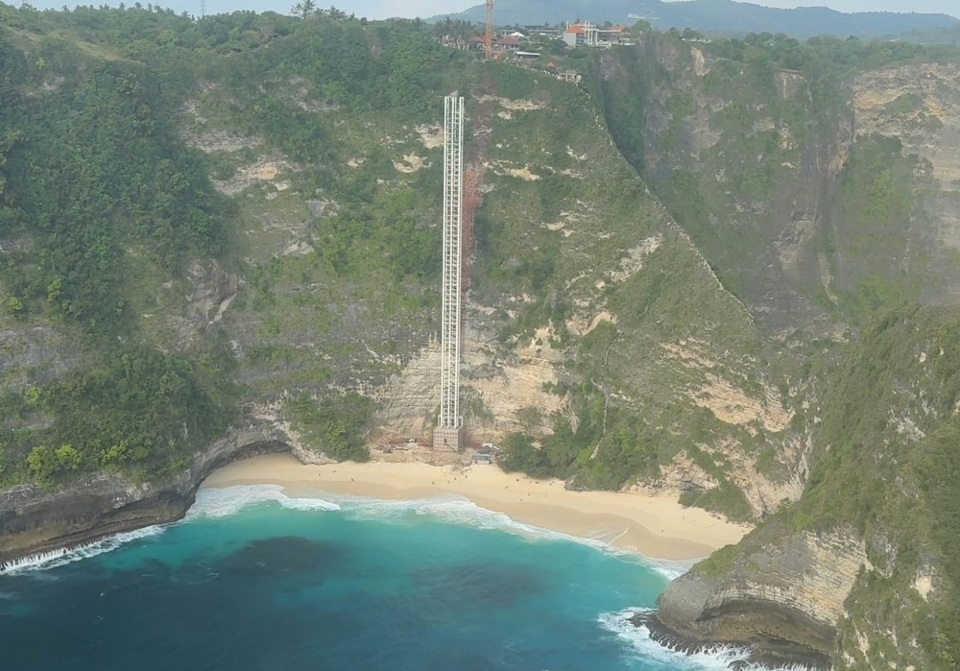
In November 2025, Bali Governor Wayan Koster ordered the controversial 182-metre glass elevator at Kelingking Beach to be dismantled after provincial authorities concluded that the project had breached a number of regulations. Following an investigation, officials found that the development did not fully comply with several licensing requirements, spatial planning rules, permit procedures, and coastal zoning regulations. The decision quickly became one of Bali’s most talked-about development cases, raising wider questions about how major tourism projects should balance investment with environmental and cultural protection.
Authorities also expressed concerns that the project went against Bali’s long-term vision of preserving the island’s natural landscapes and cultural identity. Kelingking Beach is widely regarded as one of Bali’s most iconic natural landmarks, and officials argued that developments in such sensitive locations must meet strict planning standards. They maintained that protecting the island’s cliffs, coastline, and natural scenery remains a priority as Bali continues to develop its tourism industry.
As a result, the provincial government instructed the developer to dismantle the structure within a set timeframe and restore the cliffside as closely as possible to its original condition. The case sends a clear message that whilst Bali continues to welcome tourism investment, future developments are expected to fully comply with planning regulations and respect the island’s unique environmental and cultural heritage.
The Legal Battle Continues
Rather than accepting the demolition order, the developer, PT Indonesia Kaishi Tourism Property Investment Development Group, has decided to challenge the decision through Indonesia’s State Administrative Court (PTUN). The company argues that it has suffered significant financial losses after investing heavily in the project before construction was ordered to stop.

According to the developer, the 182 metre glass elevator was already around 70 per cent complete when work was halted. Its legal team has also questioned how the project was able to progress so far if there were problems with permits and planning requirements from the beginning. They argue that the approval process should also be examined, rather than placing all of the responsibility on the developer.
The legal dispute has already seen one setback, with an earlier lawsuit being dismissed over administrative paperwork rather than the merits of the case itself. However, the investors later filed a revised claim, allowing the case to move forward through the courts. As the proceedings continue, the outcome could have wider implications for future tourism developments in Bali, particularly when it comes to balancing investment with planning regulations and environmental protection.
Where Development Meets Conservation
The dispute has become about much more than just the glass elevator. It’s sparked a wider conversation about how Bali should develop its tourism industry in the years ahead. Supporters of the project argued that it would have made Kelingking Beach more accessible, especially for visitors who find the steep staircase difficult to manage. Some also believed it could have made emergency access to the beach quicker and more efficient.
On the other hand, many people felt the project simply didn’t belong in such an iconic location. Critics argued that adding a large modern structure would change the landscape that makes Kelingking Beach so special and could have an impact on the surrounding coastal environment. Environmental groups and many local residents have long maintained that Bali’s natural beauty is one of its greatest assets, and once it’s lost, it’s incredibly difficult to get back.
In many ways, the debate reflects a much bigger challenge facing Bali. As tourism continues to grow, so does the demand for new attractions and improved infrastructure. The question is how to meet those demands whilst protecting the landscapes, culture, and identity that have made the island one of the world’s most loved destinations in the first place.
A Decision that could Shape Bali’s Future
For now, the future of the glass elevator remains uncertain. Although the provincial government ordered the structure to be demolished, the process has effectively been paused while the case moves through the courts. Authorities have said they’ll respect the legal process before deciding on the next steps, meaning the final outcome now rests with the court.
Whatever the decision, the case has already become much bigger than a single development in Nusa Penida. It’s likely to set an important benchmark for future tourism projects across Bali, reminding both investors and developers that environmental regulations, planning laws, and licensing requirements are expected to be met before construction gets underway.
More broadly, the dispute highlights the challenge Bali continues to face as it grows. The island wants to attract investment and improve its tourism infrastructure, but it also wants to protect the landscapes and cultural heritage that have made it famous around the world. How this case is resolved could influence not only the future of the Kelingking Beach project, but also the way major developments are planned and approved across Bali for years to come.
Building without Losing Bali
Whatever the court’s decision, the glass elevator has already become far more than a construction project. It’s sparked a wider conversation about what Bali’s future should look like. As the island continues to welcome investment and millions of visitors each year, the challenge isn’t simply building more- it’s deciding how development can move forward without taking away the very landscapes that have made Bali famous around the world.
There are good arguments on both sides. Better infrastructure can improve accessibility and create new opportunities for tourism, whilst protecting Bali’s cliffs, coastlines, and cultural heritage remains just as important. Finding the right balance won’t always be easy, but it’s a conversation that’s becoming increasingly difficult to ignore. For now, the final decision lies with the courts. Whatever the outcome, the case is likely to influence how major tourism projects are planned and approved in the years ahead. Because in the end, Bali’s greatest asset has never been a single attraction or development- it’s the island itself.