




Bali is full of communities. There are founder groups, creative circles, neighbourhood networks, parent communities, hospitality groups, cultural gatherings, business clubs, retreat communities, sports groups, and countless informal WhatsApp chats connecting people across the island.
From the outside, this can create the impression that belonging is easy. Join the group, attend the gathering, introduce yourself, and connection should naturally follow.
But being included in a community and feeling heard within it are not always the same thing.
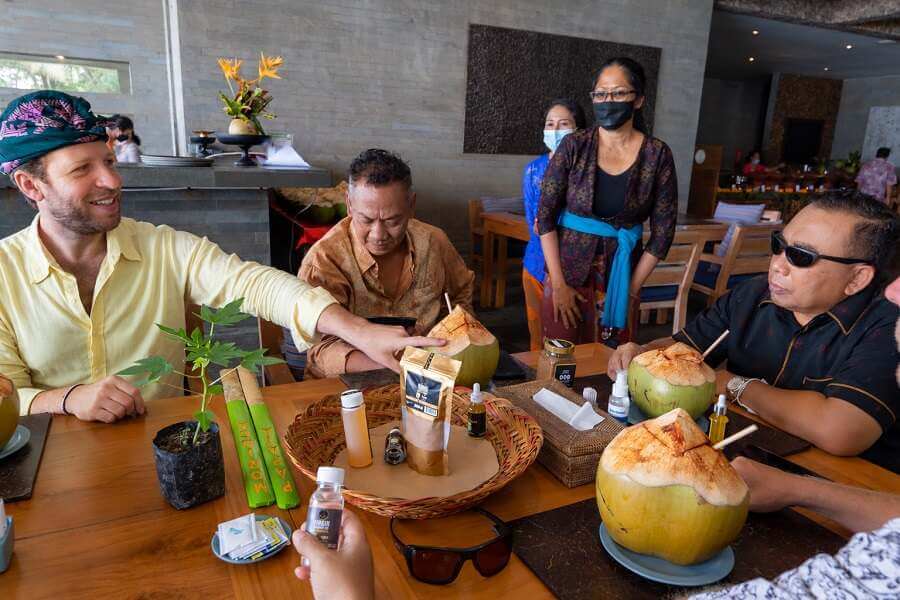
A person can attend every event, know many names, be active in several group chats, and still feel that very few people actually know what is happening in their life. They may be surrounded by conversation without feeling that there is space for their own voice.
One reflection describes this clearly: “They’re not really being heard.”
This distinction matters because communities are often measured by size. Organisers look at membership numbers, attendance, engagement, registrations, or the number of people in a digital group. These figures can be useful, but they do not necessarily reveal the quality of the relationships inside the community.
A group of five hundred people may feel less connected than a circle of ten if only a few members consistently speak.
This happens naturally. Some people are more comfortable talking in public. Others process their thoughts more slowly, prefer smaller conversations, or need trust before sharing something meaningful. In a large gathering, the most confident voices can unintentionally become the voice of the entire community.
The result is that participation becomes uneven. A small group speaks, another group listens, and some people gradually stop contributing because they do not feel that their presence changes anything.
This can happen online as easily as it happens in person. A community chat may contain hundreds of members but be driven by the same ten people. Important questions disappear beneath constant messages. New members hesitate to participate because the social dynamics already appear established.
Being present is therefore not the same as participating.
And participating is not necessarily the same as being heard.
For Bali, this question is especially relevant because so many communities include people from different cultures, languages, professions, and lengths of residence. A person who has lived on the island for fifteen years may understand the social landscape very differently from someone who arrived three months ago. A Balinese business owner may experience a neighbourhood differently from an international entrepreneur working in the same area.
A healthy community needs space for those different perspectives.
That does not mean every opinion needs to become a decision. Listening and agreeing are different things. People can feel heard even when the final outcome is not what they preferred, provided they believe their perspective was genuinely considered.
This is where good hosting becomes important.
The role of a community leader is not simply to speak to the group. It is also to notice who is not speaking.
Who has entered the room alone? Who has been attending regularly but remains on the edge of conversations? Who might contribute something valuable but is unlikely to raise their hand first?
Small changes can make a considerable difference.
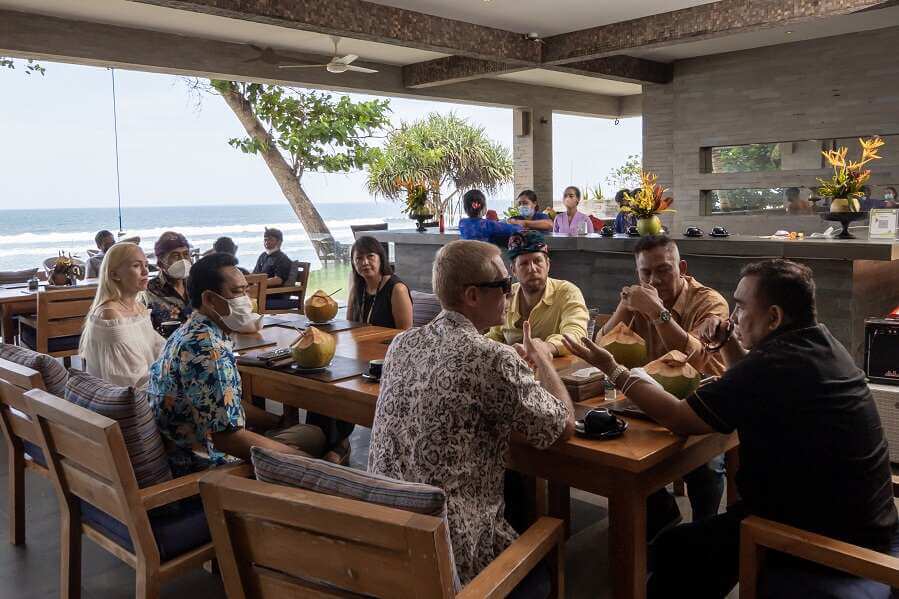
Instead of beginning every gathering with a presentation, hosts can create smaller conversations. Instead of asking, “Does anyone have a question?” in front of a large audience, people can first discuss an idea with two or three others. A quieter participant may speak freely in a group of four even if they would never take a microphone in front of two hundred people.
Questions also matter.
“What do you do?” is useful, but it tends to produce predictable answers.
“What brought you here?” creates more room.

“What are you working through right now?” may reveal something different again.
“What would make this community more useful to you?” changes the relationship entirely because it signals that participation is not only expected but valued.
Listening is equally important after the question is asked.
Many conversations are technically exchanges of words but contain very little listening. While one person speaks, the other prepares an answer, waits for an opportunity to share their own experience, or searches for advice to give.
Being heard requires something slower.
It requires allowing another person’s experience to exist without immediately correcting, comparing, or solving it.
This becomes even more important in international communities. Cultural differences can influence how directly people speak, whether they disagree publicly, how comfortable they are interrupting, and how much context they expect others to understand.
The loudest response is therefore not always the strongest opinion.
Silence does not necessarily mean agreement.
A good community creates different ways for people to participate.
Some may speak during gatherings. Others contribute through one-to-one conversations, written feedback, introductions, volunteering, organising, or simply by consistently showing up. Contribution should not be measured only by visibility.
There is also a responsibility on the participant’s side.
Feeling unheard can sometimes come from waiting for somebody else to create the perfect opening. Communities become stronger when members also make an effort to participate, ask questions, introduce themselves, and share what they need.
Connection is not something delivered entirely by an organiser.
It is co-created.
This idea becomes especially important as communities grow. A gathering of twenty people can depend heavily on one host. A community of several hundred cannot. Relationships need to begin forming between members rather than constantly passing through the person who created the group.
The strongest communities eventually become less dependent on a centre.
Members welcome newcomers.
They create introductions.
They remember who has been absent.
They answer one another’s questions.
They organise their own conversations.
The network begins to support itself.
Bali already has many examples of this kind of organic community building. People connect through schools, neighbourhoods, businesses, cultural activities, sports, volunteering, creative projects, events, and mutual friends. The strongest of these groups are not always the most visible.
Often, they are the ones where people know they matter.
That feeling is difficult to measure, but easy to recognise.
It is the difference between entering a room and being noticed.
Between speaking and knowing that somebody listened.
Between belonging to a group and knowing that the group would notice if you disappeared.
As Bali continues to attract people looking for community, the question may not be how many more groups need to be created.
Perhaps the more important question is how the communities that already exist can become places where more people genuinely have a voice.
Are you part of a community that knows you are there or one that actually knows you?