




Bali is not only full of people, it is brimming—overflowing—with sound. Not the hush of silence, but the endless chorus of roosters trumpeting at dawn and dusk, bullfrogs rumbling from the ditches, cicadas slicing the air with shrill insistence, dogs locked in ancient disputes, and lone howls lifted to a starless sky, for no obvious reason.
In Bali, sound is not something you can shut out. Sound enters through the thin doors, that lack the solid “thunk” of a western craftsmanship. Noise slips beneath the windowsill, weaves itself through rafters and air spaces, clings to the walls like incense smoke.
The soundscape is vast, without edge.
In my first years, I tried to shut it out—closed warped wooden doors, latched windows made of little more than a thin frame and a single pane of wavering glass. But nothing closes here, not completely. No seal is airtight. The house breathes—through the gentle space where light and noise slip in like wandering spirits.
At first, I tried to keep it out—the clamour of roosters at dawn, the deep-throated chants of bullfrogs,
the high, metallic cry of crickets in heat, the endless territorial disputes of stray dogs. But nothing in Bali is built to be closed. Even the best-built houses do not block out the environment they are in, but breathe.
The doors rarely close with the solid finality I once knew—no satisfying thunk, no insulated silence. Only light, air, and the unfiltered chorus of life outside spilling in.
I come from the North, where privacy is sacred, where the ideal home is a sealed fortress of temperature control and personal space. There, we build silence with double glazing, thick carpets, and doors that lock not just sound, but the world itself, out.
There, individuality is a virtue—a lifestyle, even. We cultivate solitude. We make appointments to meet. We schedule connection. Noise is disturbance, uninvited presence, a trespass on the self.
Here—closer to the equator—life is a permeable membrane. Houses are porous. So are boundaries.
A voice, sudden and soft: “Hello?”
And there, framed in the open doorway—a GoJek driver, a neighbour, a stranger with a question, a villager with a request as natural as the breeze. And sometimes it is I who call—calling her name to share a thought, but she is already gone, having slipped barefoot through the same open door that lets the world in.
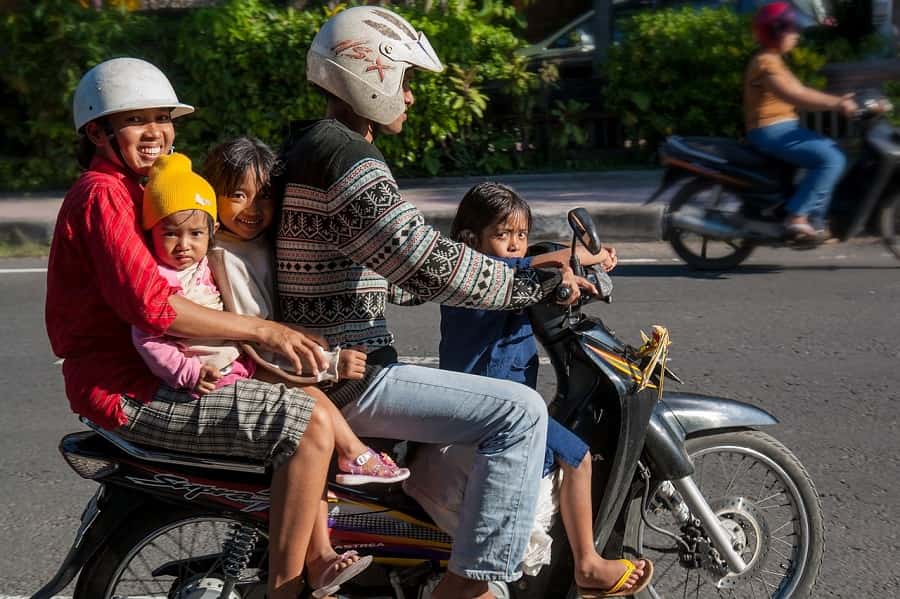
The motorbike’s rumble comes as a welcomed information: Someone is arriving. Someone is leaving.
It tells the story of motion, of life breathing in and out. Even inside your home, you are never entirely alone. You are part of something, whether you like it or not. And slowly, perhaps grudgingly, I adjusted to it.
I began to learn that here the rain announces itself long before it touches the earth. You hear the wall of downpour coming closer, feel it rolling in through the trees like a growing drumbeat—and then it’s upon you. It drowns out the roosters, the frogs, the dogs and even your thoughts if you let it.
This rain is not a disruption. It’s the cleansing voice of the earth, reminding you: You’re not in control. Give up on your plan for the moment, or the whole day.
That’s the truth of life in this place. You cannot close the door on the world because the world is permeating.
I used to dream of silence, the kind that Northern houses promise—where insulation shields you from your neighbours, where each person is an island, floating in a tidy sea of disconnection. But here, the silence is not absence of sound, but absence of separation.
It took effort—yes. It took months, maybe years, to stop resisting the world as it poured in through the thin windows of my house. To stop longing for the hum in my ears.

Instead, I began to listen. To the tropical, natural sounds in the distance. To the ceremonies rising in chorus from a nearby temple. To the old woman sweeping her courtyard at dawn, rhythmically, patiently, as if brushing yesterday from the earth.
In the tropics, life is a shared event. Sound is a companion.
Not all of it pleasant, but all of it is shared.
There is no mute button.
There is no pause.
It took effort. Patience. Time. To surrender to the music of it all—to stop fighting, and start listening.