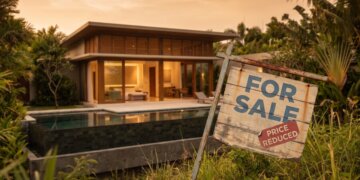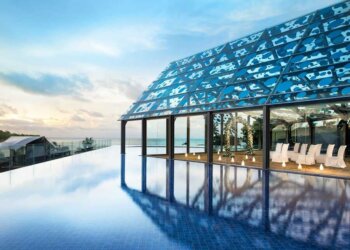




Bali real estate has a default setting. A villa, a pool, a nightly rate, a management company, and a spreadsheet projecting the next ten years of holiday demand. It is a proven model, and it dominates the conversation so completely that most buyers never ask whether the island’s land can earn a living any other way. It can. Across Bali right now, some of the most interesting property stories have nothing to do with accommodation at all, and the people behind them share one habit: they looked at a piece of land and saw what it could do rather than what it was.
A Sound Stage on a Black Sand Beach
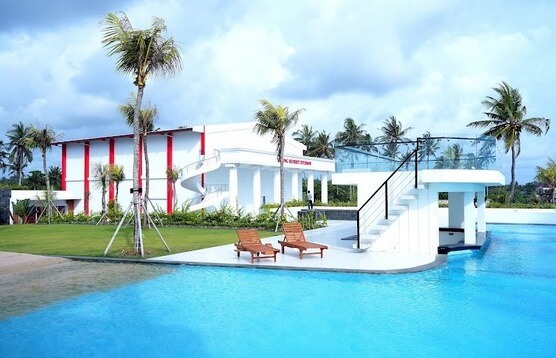
Drive west into Tabanan, past the rice terraces and the temple at Tanah Lot, and you reach Beraban, a stretch of black volcanic sand that most investors would never shortlist. Bo H. Holmgreen looked at it and saw a film studio. Viking Sunset Studios now operates there as a full-service production facility, anchored by what the studio describes as the region’s largest enclosed green screen soundstage, currently undergoing NC 20 certification, with on-site accommodation for cast and crew and a beachfront setting that doubles as a location in its own right. Productions from the United Kingdom, Germany and the United States have shot there, and the work is beginning to carry the island’s name outward. The Ghost and the Gun, shot on the Tabanan backlot, premieres in Kuala Lumpur on 28 August. Bandit, an Indonesia and USA co-production, has won the Grand Jury Prize at the Dances With Films festival in Los Angeles and Best Foreign Film at the Burbank International Film Festival. The studio has also invested alongside London-based Singer Studios in The Pirate Queen: No Safe Waters, an immersive experience narrated by Lucy Liu and selected for the Cannes Film Festival’s Immersive Competition.
The timing is not accidental. Indonesia’s box office climbed from below USD 75 million in 2020 to USD 392 million in 2024, with local films taking 65 per cent of the national market, and the country now ranks ninth in the world for both cinema admissions and film production. Jakarta launched cash incentives and tax rebates in 2026 to position itself as a regional cinema hub, an announcement made, fittingly, at an industry summit held in Bali. Behind every one of those numbers sits a physical requirement: sound stages, workshops, accommodation, offices. A film industry is a real estate story wearing a costume.
What makes the Tabanan example instructive is the logic of the site. The same qualities that made the land unremarkable for a villa project, its distance from the cafés, its dramatic and untamed coastline, are precisely what make it valuable to filmmakers. Jungle, rivers, cliffs, caves and an empty beach are production assets. The land did not change. The eyes looking at it did.
The Family Who Replanted Their Inheritance
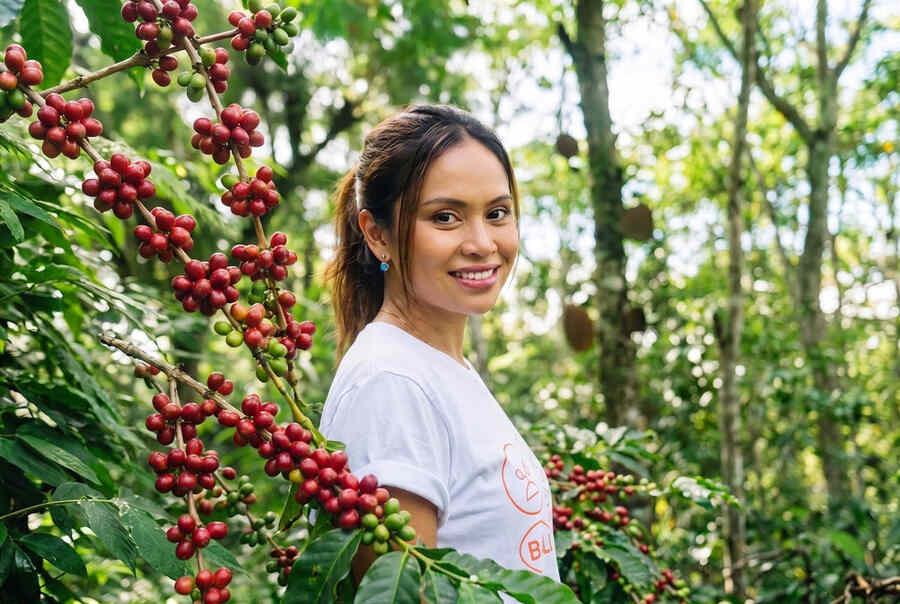
The most compelling version of this story is not foreign at all. In 1981, in the volcanic highlands of Kintamani, Nyoman Sudana and his wife Wayan Sari made a decision that must have looked reckless to their neighbours: they converted their ancestral rice fields to coffee. Rice pays every season. Coffee made them wait four years for a first harvest, which arrived in 1985, the same year their daughter Ayu was born.
Four decades later, Ayu Sudana is Co-Founder and Managing Partner of Bali Beans, and the family land in Kintamani supports a business her parents could scarcely have drawn on paper. The farm grows the coffee. An independent processing and roasting facility on site controls quality from cherry to bean, working with 22 women farmers from the surrounding community. A direct trade operation ships worldwide. A roastery in Canggu puts the brand in front of the island’s café crowd. And a growing experience arm brings paying visitors to the farm itself, from plantation journeys to barista and roaster training. In 2008, Kintamani Arabica earned Geographical Indication certification, formal recognition that this specific soil, at this specific altitude, produces something that cannot be replicated elsewhere.

Count the income streams on that one landholding: crop, processing, export, retail, education and tourism. Not one of them is a villa. The Sudana family never sold the land, never subdivided it, never leased it to a developer. They changed what the land does, layer by layer, over forty years. It is the most patient property strategy on the island, and one of the most successful.
The ambition now reaches beyond the family’s own fences. “Bali’s growth story should not be driven by tourism alone,” Ayu explained. “Agriculture remains at the heart of the island, and for farming communities, coffee can provide an important additional source of income while helping preserve the land and traditions that have supported generations.” Through direct trade, the business builds direct relationships with growers, strips out unnecessary layers of middlemen, and tracks how much value returns to the farming community. “Sustainability is not simply about the environment,” she noted. “It is about creating an agricultural model where farmers have stronger income opportunities, partners understand exactly what they are buying, and growth is shared more fairly from crop to cup.”
A Hospital Corridor by the Sea
The third story belongs to the state. In June 2025, Indonesia inaugurated its first health special economic zone on 41 hectares of beachfront in Sanur, anchored by the Bali International Hospital. The numbers attached to it are substantial: around IDR 10.2 trillion in targeted investment, more than 43,000 direct and indirect jobs, and a goal of treating between 123,000 and 240,000 patients a year by 2030. The ambition is to repatriate a portion of the estimated IDR 86 trillion Indonesians currently spend on medical treatment abroad each year. The Icon Cancer Centre began operating within the zone in May 2025, and for the first time in the country’s history, foreign doctors have been permitted to practise in Indonesia under the zone’s management.
For property, the implications reach well beyond the hospital gates. A healthcare corridor generates demand that behaves nothing like tourism: patients and their families stay for weeks rather than nights, book in every month of the year, and choose accommodation on quiet, comfort and proximity rather than beach clubs. Recovery lodging, long-stay residences and family accommodation around Sanur will earn their income from a demand engine that did not exist on the island three years ago. Sanur was long described as the Bali where nothing changes. It is now home to the island’s most structural change of all.
The Question Behind All Three
A film founder, a farming family and a government looked at three pieces of Bali and asked the same question: not what is this land, but what could it do. That question is available to anyone. It does not require abandoning the villa model, which remains a sound answer for many buyers, but it does require recognising that villas are one operating model among several, and that the income from any piece of Bali follows the use built and run upon it rather than the postcode alone.
The island keeps rewarding the people who ask the better question. The rice farmers of Kintamani asked it in 1981. The next person to ask it is probably standing on an unremarkable piece of land right now, seeing something the rest of us have not imagined yet.
Fullers Properties works exclusively on the buyer’s side, helping international and Indonesian buyers understand what a piece of Bali can genuinely do before they commit to it. If you are weighing land, a project or an idea that does not fit the usual villa mould, that is a conversation we have every week, and we are always happy to have it over a coffee. Preferably one from Kintamani.