




By: Someone Who Actually Lives There
Most people planning a trip to Nusa Penida start with the same five photos: Kelingking’s T-rex cliff, the Broken Beach arch, Angel’s Billabong, Diamond Beach, Crystal Bay sunset. Fair enough, they’re stunning, and Instagram doesn’t lie about that part.
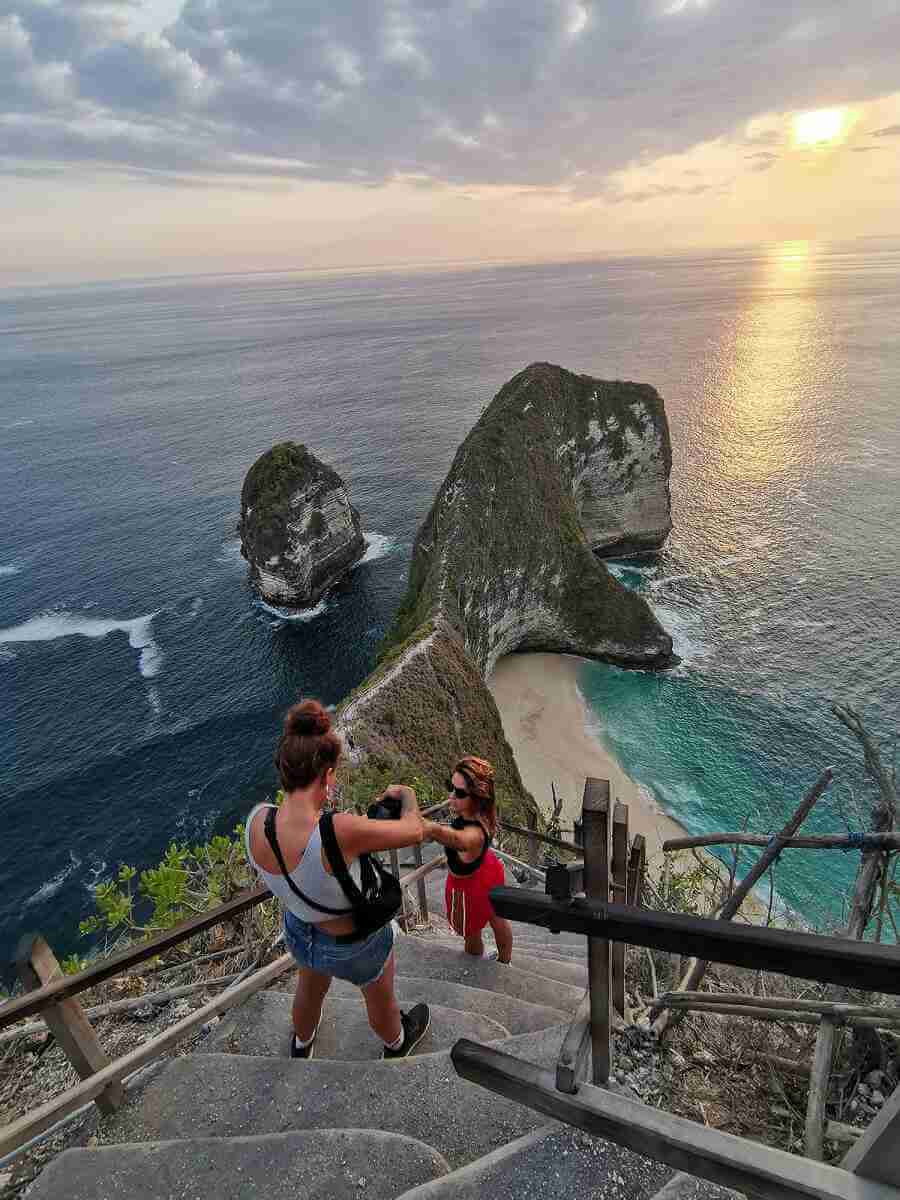
What Instagram doesn’t show you is how much gets lost between planning a trip online and actually landing on the island. I run a small private tour operation, Melali Nusa Penida (melalinusapenida.com), based right here on the island, and I’ve spent enough mornings helping confused, overheated guests recalibrate their expectations to know exactly where that gap usually is. Here’s what I wish everyone knew before they got on the boat.
The island is bigger and rougher than it looks in photos
Nusa Penida isn’t a flat, walkable island you can casually stroll around. It’s hilly, the roads are narrow and winding, and distances that look short on a map can take 40+ minutes by car because of the terrain. If your itinerary has you doing West and East side attractions in one day “because they’re both on Nusa Penida,” someone hasn’t looked at a real map. Pick one side per day, or you’ll spend more time in the car than at the viewpoints.
Entrance fees just changed, and pricing here moves faster than most articles can keep up with
This is exactly the kind of detail that trips people up: as of August 2026, Kelingking, Broken Beach, Angel’s Billabong, and Crystal Bay now have a combined entrance ticket, Rp 25,000 for adults and Rp 15,000 for children, applying to everyone, local and foreign visitors alike. Before this, those four spots were free to enter (you only paid for parking). Atuh Beach and Diamond Beach have their own separate shared ticket. On top of that, there’s a mandatory island retribution fee that visitors pay online before arrival. As of the same policy update, this retribution now applies only to foreign visitors, while domestic Indonesian travellers are exempt from it. Rules like this shift fast on Nusa Penida, so treat any number you read, including this one, as a starting point, and double-check with a local operator or the current official signage before you go.
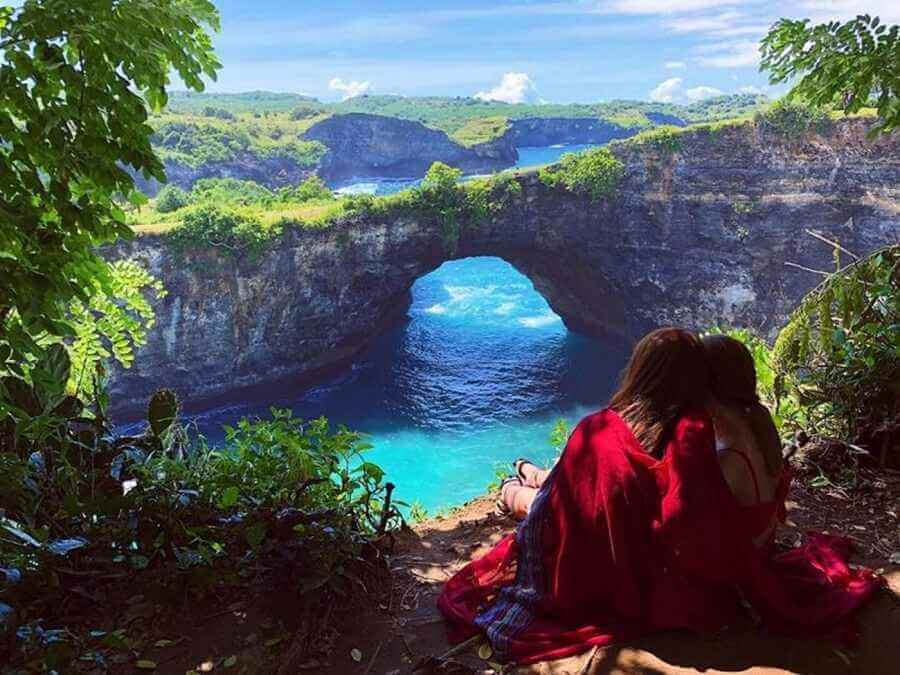
Manta sightings are not guaranteed, and it’s worth being upfront about that
Manta Point and Manta Bay are two different snorkeling spots with two different manta ray behaviors, and the mantas move with the season and the tide, not with your travel schedule. I’ve had guests get lucky with six mantas circling them for twenty minutes, and I’ve had guests see nothing. Any guarantee of a sighting is more of a hope than a promise. What experience can actually offer is picking the right spot and time window based on recent conditions, that’s the difference a local operator makes, even if it’s not a guarantee.
The boat crossing is the real adventure, not the beaches
Nobody warns first-timers about this part. The fast boat from Sanur (or wherever you’re departing) can get genuinely rough depending on the day, and seasickness catches a lot of people off guard. If you’re prone to motion sickness, take something before you board, not after you start feeling it. Sit toward the middle of the boat, not the back, and keep your eyes on the horizon. This one piece of advice has saved more people’s mornings than anything else I tell guests.
Locals know things Google Maps doesn’t
Nusa Penida’s roads change fast, new shortcuts open, old ones wash out in the rainy season, and Google Maps routing here is notoriously unreliable compared to mainland Bali. More than once I’ve watched a guest’s rental car GPS confidently route them down a track that a motorbike would struggle with, let alone a car. If a local driver tells you a road is bad, believe them over the app.
There’s a whole other Nusa Penida past the five famous photos
If you only have time for the highlight reel, the classic spots earn their reputation. But if you’re the kind of traveller who likes seeing what’s past the crowd, Nusa Penida has more going on than Kelingking and Broken Beach.
Korawa Beach and Lumangan Beach are two quieter stretches of coastline that most first-time visitors never hear about, simply because they don’t show up in the same handful of Instagram geotags everyone else uses. Tembeling, on the West side, pairs a natural freshwater spring with a short forest walk, a nice contrast to the cliff-and-viewpoint circuit most of the island is built around.
There’s also a side of the island that’s less about scenery and more about what’s being protected. A local turtle conservation centre on the island cares for Hawksbill and Green Sea turtles as part of ongoing marine protection work, it’s an observation-based visit, not a place to swim with or handle them, which is exactly how it should be. Nusa Penida is also home to a bird sanctuary supporting the conservation of the Bali starling, one of the world’s rarest birds, found almost nowhere else in the wild.
And if you want a souvenir with actual meaning behind it, look into Cepuk, the traditional handwoven cloth that originates from Nusa Penida and carries real cultural and ceremonial significance here, not just a tourist pattern.
The island runs on a slower rhythm, let it
This is less a tip and more a mindset shift. Nusa Penida doesn’t have the infrastructure or crowd-management systems of mainland tourist hubs. Queues at popular viewpoints can be genuinely long during peak hours (mid-morning is usually the worst). Warungs might be out of a dish. Wifi drops. None of this is a flaw in your trip, it’s just what an island still finding its footing with rapid tourism growth looks like. Visitors who come expecting Bali-mainland polish tend to leave frustrated. Visitors who come expecting an island still becoming what it’s becoming tend to leave in love with the place.
Dwipa runs Melali Nusa Penida, a small private tour operator based directly on Nusa Penida island rather than the Bali mainland.