



If you are currently building a house in Bali—or planning to order furniture, tiles, electrical equipment, or just about anything else—you might want to take a deep breath. For the next few weeks, not very much will happen.
This year, two major Indonesian holidays have aligned in a way that quietly presses the pause button on much of the island’s economy. Bali’s sacred day, Nyepi, the famous Day of Silence, arrives almost simultaneously with the end of Ramadan, the Muslim fasting month observed across Indonesia.

Individually, each holiday already slows things down. Together, they create something closer to a national timeout of THREE WEEKS.
Nyepi itself is unique. For twenty-four hours the entire island shuts down. The airport closes. Roads fall silent. Even lights are dimmed at night so that wandering spirits will believe Bali has been abandoned by humans. It is a day of stillness, reflection, and spiritual reset. Ramadan ends with Lebaran, one of the largest annual travel movements on Earth. Millions of Indonesians leave the cities and return to their home villages to celebrate with family.
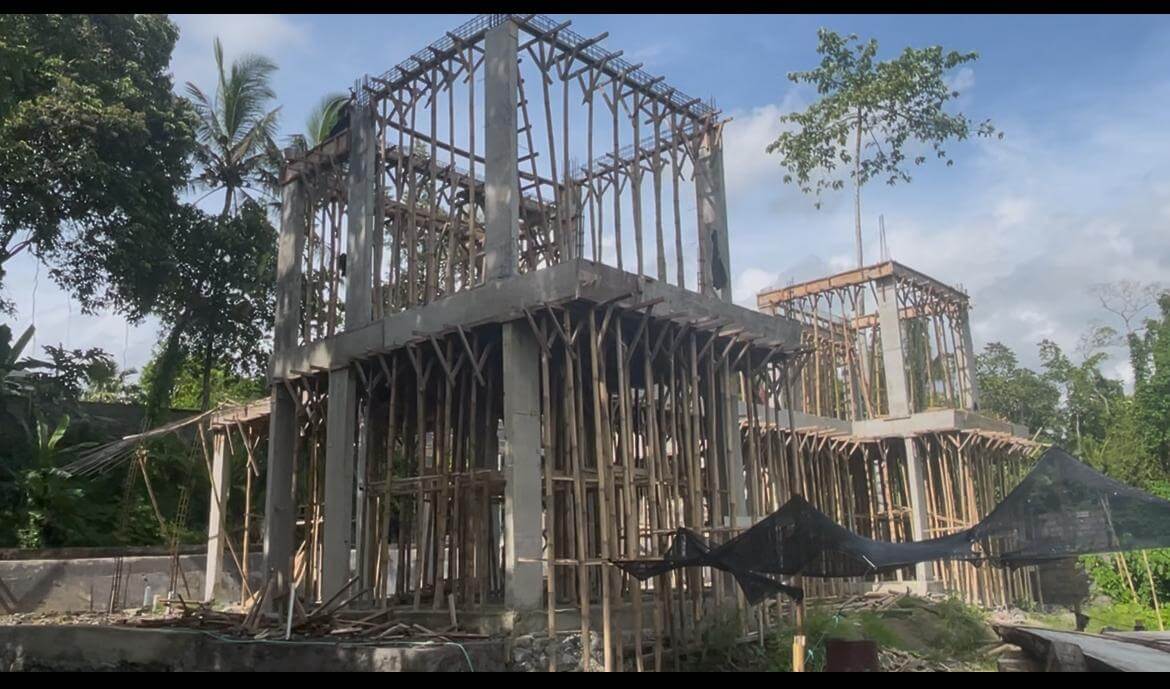
Most construction workers in Bali come from other islands—Java, Lombok, or Sumbawa— and many follow the Muslim tradition. Around mid-March they pack their bags and board ferries and buses to travel home.
They will return sometime in early April. Until then, construction sites fall strangely quiet. Transport slows. Warehouses close. Deliveries pause somewhere along the chain of ferries, trucks, and ports that connect the Indonesian archipelago. If you have ordered materials or equipment recently, it may still arrive—eventually.
Just not before the middle of April. For anyone building property in Bali, this moment offers an early lesson in how things work here. Because constructing a house on this tropical island is not simply a technical process.
It is more like herding ants.
The ants are hardworking, friendly, and surprisingly skillful. But they move according to their own rhythms. Try to rush them and they scatter. Try to force the pace and they politely wait until the universe is ready again.
Most construction workers live directly on the building site in temporary plywood huts assembled beside the rising structure. In the evenings they cook rice, smoke clove cigarettes, and listen to Dangdud music drifting through the humid night air.
At sunrise the site comes alive again: hammers tapping, concrete mixers turning, rebar clanking in the dust.
On paper, everything follows the architectural plans. In practice, the plans are more of a philosophical suggestion. Sometimes the right materials are used in the wrong place. Sometimes the wrong materials are installed with complete confidence in exactly the right place. Which is why a project manager quickly learns that daily visits are essential. Conversations with the foreman lead to discussions with the architect, which lead to small adjustments before misunderstandings quietly solidify into permanent architectural features.
And then there are the cultural dimensions of building in Bali. Because land here is never just land. Certain corners of a property cannot be touched. A small shrine might sit beneath a tree, immovable not because of municipal zoning regulations but because it has been sacred for generations. A temple wall might force the access road to narrow.
Sometimes the obstacle is invisible. A local family might explain that a particular patch of soil must remain undisturbed because the ancestors once declared it sacred.
There is no sign. No official map. But the building plans must adapt. Even roads occasionally negotiate with the spirit world. An engineer might draw a straight access road across a rice field because it is the shortest route. But if dividing the field would disturb the spiritual balance of the land, the road must curve gently through the paddies instead, weaving between irrigation channels like a ribbon laid carefully across the landscape.
And then, of course, there is the weather. The rainy season usually begins in November and officially ends around April. In reality it sometimes lingers until June, turning construction sites into muddy arenas where trucks sink slowly into the clay and newly dug foundations resemble small ponds.
Work slows. People adjust.
Because in Bali, construction is less a linear project than an ongoing negotiation between weather, culture, logistics, belief systems, and the quiet improvisation that shapes daily life. Eventually—slowly—the walls rise.
Roofs appear. Windows slide into place. Gardens take shape. But by the time the final tile is laid, most foreign builders have learned something important about life on the island.
In Bali, progress rarely moves in straight lines. It bends around ceremonies, holidays, rainstorms, family obligations, and the rhythms of an island where time itself seems to move at a slightly different speed. Which is why patience becomes the most valuable tool on any Balinese construction site.
Patience—and a sense of humor.
Because building a house in paradise is not just about architecture.
It is about learning how to herd ants.
It is about chasing a vision—no matter how winding the road to get there may be.