



Bali is more than beaches and temples it’s an island where creativity pulses through every village, every home, every heartbeat. While many visitors come for the surf or the sunsets, those who take a closer look discover something deeper: a culture where art isn’t just decoration it’s devotion, identity, and daily life.
From intricate woodcarvings to expressive paintings, from offerings made of woven palm leaves to the delicate batik fabrics fluttering in shopfronts, Balinese art and crafts are everywhere. They are not merely souvenirs; they are stories alive, sacred, and handcrafted.
Art That Breathes with Spirit
In Bali, art isn’t locked away in museums. It’s on temple walls, in street-side shrines, and in the rhythm of daily offerings. The island’s Hindu-Balinese belief system, which blends religion, ritual, and nature, is at the heart of its creativity. Art is a form of spiritual expression, a bridge between the seen and the unseen.

Almost every Balinese child is introduced to art from a young age, learning to carve, paint, or dance as part of cultural tradition. Artistic talent is passed down through generations not just in formal lessons , but in the flow of daily life. It’s in the fingers of grandmothers folding palm-leaf offerings. It’s in the hands of teenagers painting barong masks for local ceremonies.
The Painted World of Bali
Balinese painting has evolved dramatically over the centuries. While originally tied closely to religious storytelling depicting scenes from Hindu epics like the Ramayana or Mahabharata modern Balinese painting reflects a broader spectrum, from political satire to abstract expressionism.
The village of Ubud, now Bali’s artistic heart, played a key role in this evolution. In the 1930s, German artist Walter Spies and Dutch painter Rudolf Bonnet collaborated with local artists, giving rise to the modern Balinese art movement. The result was a blending of traditional themes with new techniques and perspectives.
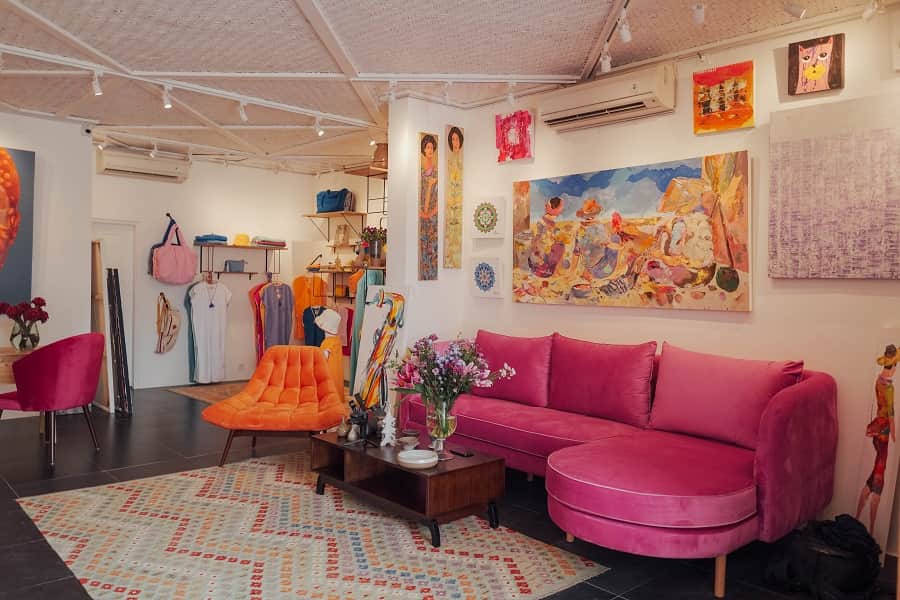
Today, you can see this fusion in Ubud’s galleries and studios. Styles vary from highly detailed traditional Wayang -style paintings, where mythical stories unfold in vibrant detail, to Young Artist style, with bold colours and childlike imagination.
Don’t miss the Agung Rai Museum of Art (ARMA) or the Neka Art Museum, where you can trace the history of Balinese painting and see how modern artists continue to reinterpret their cultural heritage.
Sculpture: Stone, Wood, and Sacred Form
If painting is Bali’s soul, sculpture might be its spine—solid, enduring, and deeply rooted in ritual. Every temple, shrine, and even roadside fountain features stone and wood carvings that are both decorative and symbolic.


Traditional stone carving (often in volcanic rock or sandstone) is especially prominent around Batubulan and Ubud. These sculptures range from fierce guardian statues like Rangda and Barong, to serene Buddhas and intricate temple reliefs. Many pieces are made specifically for temple use, carefully consecrated through ceremony before installation.
Wood carving, meanwhile, finds its masterpiece in the village of Mas, where families have been carving for generations. From ornate doors to delicate mask work, the attention to detail is breathtaking. Every curve and motif tells a story, often rooted in mythology or nature. Some carvings depict deities, while others show scenes from daily Balinese life —a farmer in the rice field, a mother weaving offerings.
Buyers beware: while you can find plenty of cheaper machine -made replicas in tourist areas, the real art lies in the handcrafted pieces found directly in the workshops of local artisans.
Traditional Crafts: Beauty in the Everyday
One of the most beautiful aspects of Balinese craftsmanship is how art blends seamlessly into everyday objects. In Bali, even something as simple as a basket or sarong is infused with care, creativity, and meaning.
Take batik and ikat textiles, for example. These traditional fabrics are made using age -old dyeing and weaving techniques, often taking weeks to complete. Batik involves wax -resist dyeing, where patterns are carefully drawn by hand. Ikat is a complex weaving style where threads are dyed before being woven, creating blurred, dreamlike designs. You can see artisans at work in villages like Tohpati and Sidemen, and even try your hand at making your own.
Then there’s the delicate art of canang sari the daily offerings made from coconut leaves, flowers, and incense. While seemingly simple, each one is an artistic expression, carefully arranged to honour the gods. These are handmade by women every morning, with intention and heart. In a way, they are the most honest form of Balinese art: ephemeral, humble, and sacred.

Other crafts include silverwork in Celuk, known for its filigree jewellery and ornate ceremonial pieces; bamboo and rattan weaving in Gianyar and Bangli; and mask -making in Singapadu, where sacred masks used in temple dances are carved and painted entirely by hand.
Art as a Way of Life
In Bali, art is not separate from life it is life. It’s not just something people do on weekends or for money. It’s woven into ceremonies, passed down in families, and taught through ritual. For the Balinese, creating art is a form of prayer, a way to bring harmony between humans, nature, and t he divine.
This connection between art and spirit is what makes Balinese creativity so powerful. When you walk through a temple adorned with carvings, or see a dancer don a painted mask, or watch a woman arrange flowers into an offering you’re not just seeing art. You’re witnessing a way of being.
Bringing a Piece of Bali Home
If you’re visiting Bali, take time to explore beyond the beaches. Visit an artist’s home in Ubud. Take a batik-making workshop in Tohpati. Watch a mask come to life in Mas. Ask questions, learn the meaning behind the motifs, and support the artisans who keep these traditions alive.
More than a souvenir, a piece of Balinese art is a piece of a culture where beauty, spirituality, and daily life are inseparable.
In a world that often values speed and mass production, Bali stands as a gentle reminder of the power of handmade things of stories told through hands, of beauty with meaning, and of art that doesn’t just decorate life, but defines it.