



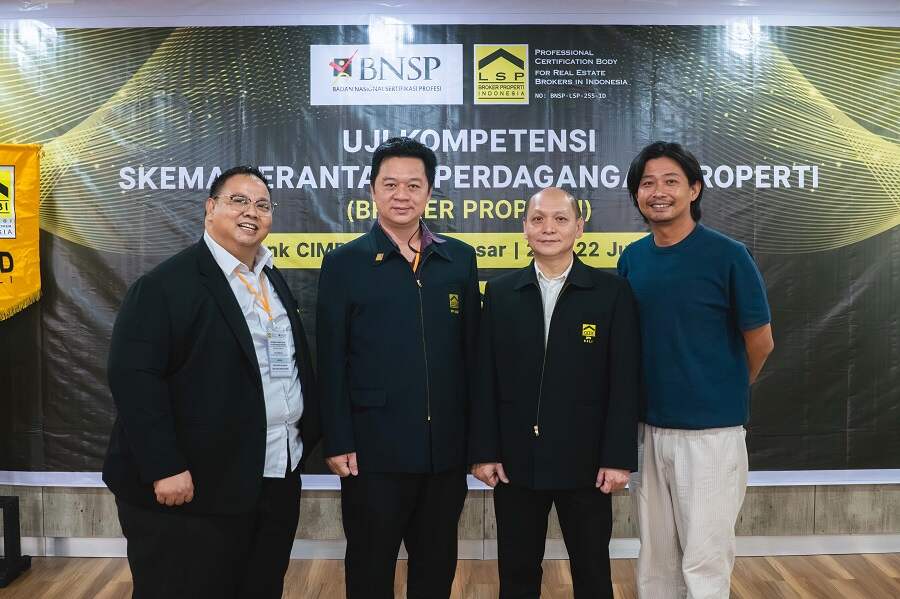
For most of the past decade, almost anyone in Bali could call themselves a property agent. That era is closing. Over two days in Denpasar, on 21 and 22 July 2026, 115 brokers sat the largest property broker competency examination the island has yet held, the first cohort in a programme that AREBI Bali intends to carry to 1,000 certified brokers by the end of the year. For an international buyer wiring money across borders into an unfamiliar market, this is not an industry story. It is the moment the market started building accountability into the person standing between you and your money.
The scale is worth pausing on. AREBI Bali now represents 121 offices and roughly 1,400 members, serving buyers who are no longer only local but national and increasingly international. The certification programme is the mechanism the association is using to raise the professional floor across all of them. This first intake was described as Angkatan I, the first batch, which tells you the direction of travel. More cohorts are already scheduled.
What the Certificate Actually Requires
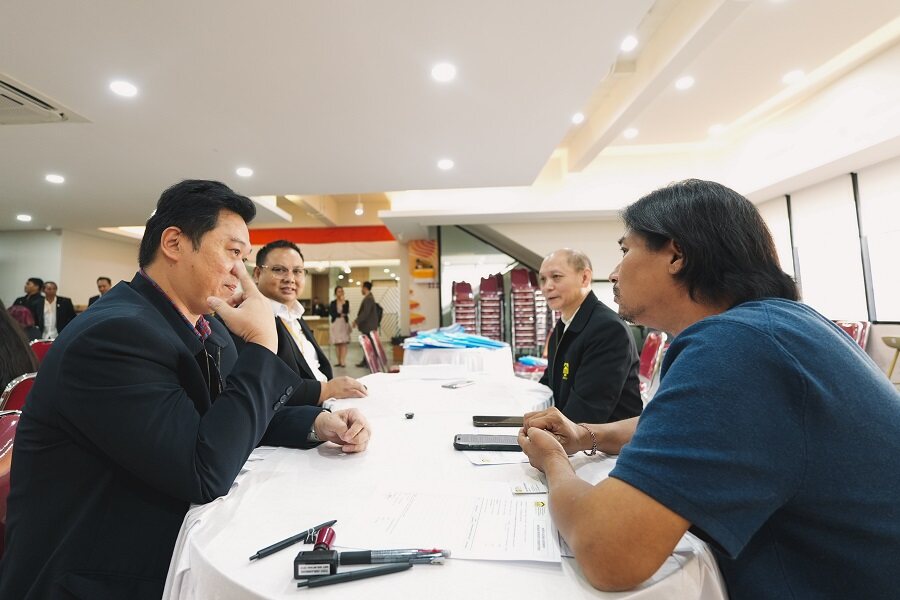
The examination is not a formality, and the people who sat it will tell you so. Candidates worked through 24 modules aligned to the Indonesian National Work Competency Standard, the SKKNI, with brokers assessed at qualification level 6 and managerial staff at level 7. The standard itself is not arbitrary. It was set by Decree of the Minister of Manpower No. 237 of 2024 and given force in the trade sector through Minister of Trade Regulation No. 27 of 2025, which formally enacted the competency framework and its qualification levels for property brokerage.
Assessment is done three ways, and the method depends on the candidate. Experienced brokers with a documented track record can be assessed on portfolio, presenting real contracts and completed transactions for scrutiny. Newer entrants are examined through structured observation and demonstration instead. A candidate who declares themselves competent is then tested against that declaration, and where the evidence falls short the result is not a pass and not a failure but a formal finding of “not yet competent”, with a requirement to study, practise and retake. The standard is designed to be met, not gifted.
Three of our own agents at Fullers sat this examination, and all three passed. Their honest account afterwards was that the preparation was demanding and the assessors’ questioning was hard. Each came out of it describing the work differently than they had going in. Being a property broker, done properly, is a profession with a body of knowledge behind it, not a business card and a phone number. That shift in self-understanding is precisely what the certification is meant to produce.
Why This Matters to the Person Writing the Cheque
The clearest way to understand the value of this regime is to consider its absence. When a buyer deals with an unaffiliated operator who turns out to be dishonest, the recourse is close to nothing. The operator changes an email address, blocks a phone number and disappears, and there is no association, no licence and no registered firm to answer for what happened. Accountability requires a name that can be held to account. That is the entire point of tying transactions to certified brokers working inside licensed, registered agencies.
Michael Hikma Gunawan, Chairman of DPD AREBI Bali, framed the misconception directly during the examination. Establishing an office does not make an operator legal. Legality requires the individual broker to hold certification and the business itself to hold a valid licence. A signboard proves neither. This is the distinction that separates a regulated professional from someone who has simply rented a room and printed a logo, and it is one buyers have historically had no easy way to see.

Fraud in the market, Michael noted, has come from operators on both sides, local and foreign alike. The certification framework is deliberately blind to nationality on that question. It cares whether the person in front of you is competent, licensed and accountable, and it builds a paper trail that survives after the deal closes.
The Foreigner Question, Answered Plainly
A claim we hear often, from buyers and from others working in the market, is that Indonesia is unfairly shutting foreigners out of its property industry. The reality is more ordinary than the grievance suggests. A foreign-owned company can still be established to operate a brokerage in Bali, because property intermediation sits in a risk category that remains open to foreign investment, unlike the lower-risk sectors now closed to it. What a foreign national cannot do is act as the licensed broker who represents a party in the transaction itself. Ownership and management are open. The transaction-facing role is reserved for a certified, licensed Indonesian broker.
This is not Indonesian exceptionalism. Singapore, Australia and Hong Kong all restrict who may practise as a licensed agent, and in most of those markets an unlicensed person simply cannot transact, whatever their nationality. The common route elsewhere, and increasingly here, is collaboration: a foreign developer or agency co-operates with a licensed local firm rather than practising directly.
Where an individual introduces a buyer or a property but is not acting as a licensed broker in the deal, whether a property owner, an independent introducer or an unlicensed agent, the correct classification is a referral, not co-broking. AREBI guidance places a referral fee at 10 to 20 per cent of the commission depending on involvement. That is not a snub to the people who bring opportunities to the table. It is an honest reflection of who carried the professional work, the paperwork and the liability through to completion.
What a Buyer Should Do With This
The practical takeaway is short. Before you engage anyone to represent you in a Bali property purchase, ask to see two things: the broker’s BNSP certification, and the registered business licence of the firm they work for. A legitimate professional will produce both without hesitation. The market is moving in the same direction, with enforcement already under way. The first stage is administrative verification of licences, with penalties escalating in stages for those who do not comply, and marketing material will in time be expected to display the broker’s licence and the firm’s registration.
Fullers had three agents in that room, and all three passed. What they described afterwards was not a formality but a genuinely demanding test, which speaks to the seriousness of what AREBI and its assessors have built. Our agents are certified across the full transaction, from securing a property through to closing it, and we apply that knowledge on the buyer’s side. Whichever side a certified broker serves, the certificate carries the same meaning: a professional who knows the process and can be held accountable for it.
The examination in Denpasar this month is the clearest signal yet that Bali’s property market is maturing in the way strong markets always do, through the steady, unglamorous work of raising the standard for everyone in it. For the brokers who earned their certification, for the association and assessors who set the bar, and for the government backing the framework behind it, this is a milestone worth being proud of. Buyers may never see the work that went into it. They will feel the difference all the same.
AREBI Bali
https://arebibali.org/